
Keynote speakers
We are pleased to present the invited keynote speakers Their expert insight will provide us with an opportunity to consider the topic of soft skills critically, constructively, and innovatively. Jessica Calarco is an Associate Professor of Sociology at the University of Wisconsin-Madison. Her research uses qualitative and mixed methods to reveal the power of privilege in families and schools and the myths that justify that power. Calarco is the recipient of numerous early career, teaching, and publication awards. Her first book, “Negotiating Opportunities: How the Middle Class Secures Advantages in School,” received the Pierre Bourdieu Award for best book in the Sociology of Education. Her most recent book, “Qualitative Literacy: A Guide to Evaluating Ethnographic and Interview Research,” won the Outstanding Publication Award for best book in Methodology. Calarco is also the author of “A Field Guide to Grad School: Uncovering the Hidden Curriculum,” and her fourth book, “Holding It Together: How Women Became America’s Social Safety Net,” will be published in 2024 with Penguin Random House. As an active public scholar, Calarco not only publishes her work in prestigious academic journals, including the American Sociological Review, the Annual Review of Sociology, the American Educational Research Journal, Educational Researcher, and Social Psychology Quarterly, but has also written for high-profile media outlets, including the New York Times, the Washington Post, the Atlantic, Inside Higher Ed, CNN, and NBC News. Prof. Dr. Christine Künzli David trained as a primary school teacher and later studied education, psychology, and general ecology at the University of Bern. From 1997 to 2007, she worked as a research assistant at the “Interfakultären Koordinationsstelle für Allgemeine Ökologie (IKAÖ)” at the University of Bern. From 1998 to 2004, she worked as a lecturer at various teacher training institutes. From 2004 to 2007, she co-managed the research sector “Education and Sustainable Development” at the institute preceding PH FHNW, and in 2008, she took over the chair of “Bildungstheorien und interdisziplinerer Unterricht” at PH FHNW. As the chair director, she worked for several years on the topic of interdisciplinary teaching and, along with her team, developed the concept of cross-curricular teaching. Her research focuses on education in the context of sustainable development and teaching in the first cycle (Zyklus 1). Since 2021, she has been directing the “Kindergarten-/Unterstufe (IKU)” Institute at PH FHNW, which has identified cross-curricular teaching as a specific focus of the institute. Federica Valsangiacomo (M.Sc.) studied educational sciences with a specialization in educational psychology and early childhood education and counseling at the University of Fribourg (CH). For over 10 years, she has been teaching and conducting research at the PH FHNW. Her primary focus is on education in the context of sustainable development and on inter- and transdisciplinarity, particularly issues related to interdisciplinary and transdisciplinary education and the design of interdisciplinary and transdisciplinary processes. She personally oversaw the development of the concept of cross-curricular teaching. Since 2021, she has taken on the interim direction of the chair “Bildungstheorien und interdisziplinärer Unterricht” and the “BNE-LAB” (ESS-LAB) at the institute. In her doctoral thesis, which is nearing completion, she analyzes decision-making processes in the context of sustainable development. Dr. Chrysi Rapanta works as a Senior Researcher and Invited Assistant Professor at the Faculty of Social Sciences and Humanities of the Universidade Nova de Lisboa, Portugal She has a Phd in Communication from the Università della Svizzera italiana, focusing on e-learning design and development. She has worked and lived in Greece, Spain, Switzerland, United Arab Emirates and Portugal. Her background is highly interdisciplinary combining the fields of Communication, Philosophy, and Education. Since 2015, she has been conducting research at the Laboratory of Argumentation, Cognition and Language of the NOVA Institute of Philosophy. A great part of her work focuses on teaching teachers of different levels and disciplines about concrete methods and tools that can be applied to foster the development of critical thinking skills among their students. Her work has been extensively published in prestigious scientific journals such as the Review of Educational Research, Teaching and Teacher Education, British Journal of Educational Technology, and Educational Psychology Review. She has been the principal researcher in several national and international research projects focusing on topics related to dialogic and argument-based teaching, digital education, active citizenship, and cultural literacy. Her name appears in the World’s Top 2% Scientists List for 2021, supported by Scopus. Chiara Ghislieri is Full Professor of Work and Organizational Psychology at the Department of Psychology, University of Turin, where she teaches Psychology of Training and Orientation. Her research topics cover different aspects of psychology applied to work: work-life balance; the role of leadership, positive and destructive, in organizational dynamics; the use of technologies for work purposes and the right to disconnect; transversal, intercultural and digital competencies; and the design of orientation and training. She is the author of a hundred essays and scholarly research papers, published in journals of international relevance. She has also written “Avere leadership” (with G.P. Quaglino) and “Psicologia della conciliazione tra lavoro e famiglia” (with L. Colombo). Alongside her research activity, carried out through qualitative and quantitative methodologies, she is involved in several applied projects, in which knowledge is reflected in practices of organizational development and support for personal development, through the design and monitoring of orientation and training paths. For the University of Turin, she follows several projects on soft skills (e.g. Passport; https://www.passport.unito.it/). 
Jessica McCrory Calarco
University of Wisconsin-Madison
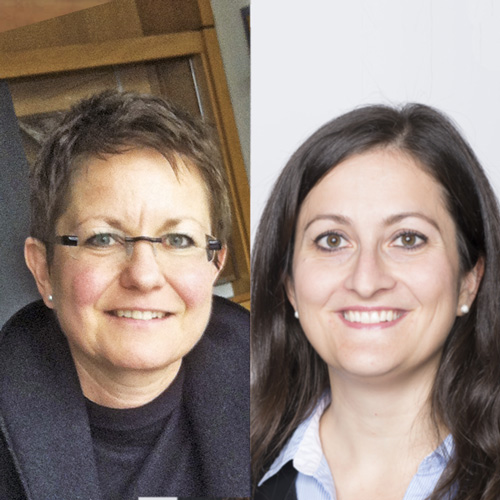
Christine Künzli David and Federica Valsangiacomo
Pädagogische Hochschule der Fachhochschule Nordwestschweiz
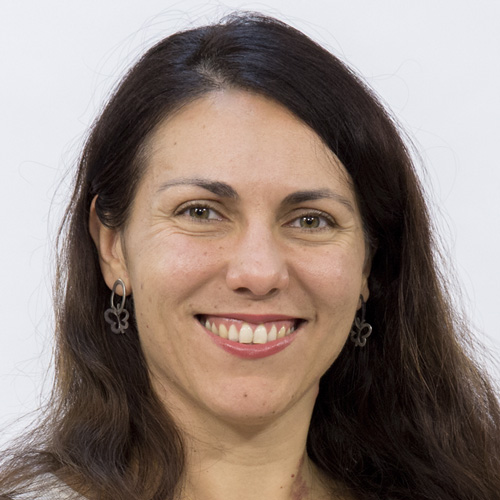
Chrysi Rapanta
Universidade Nova de Lisboa

Chiara Ghislieri
Università degli Studi di Torino